Building a More Complete Approach to Metabolic Health

As Insulin IQ becomes part of Metabody, we want to help our community understand not only what is changing, but why these organizations fit together in the first place.

Metabody’s vision is ambitious: “Continuous, intelligent metabolic care for every body.” The goal is to move beyond a healthcare system built primarily around occasional appointments and instead create one that continuously learns from the individual and helps turn that information into better health.

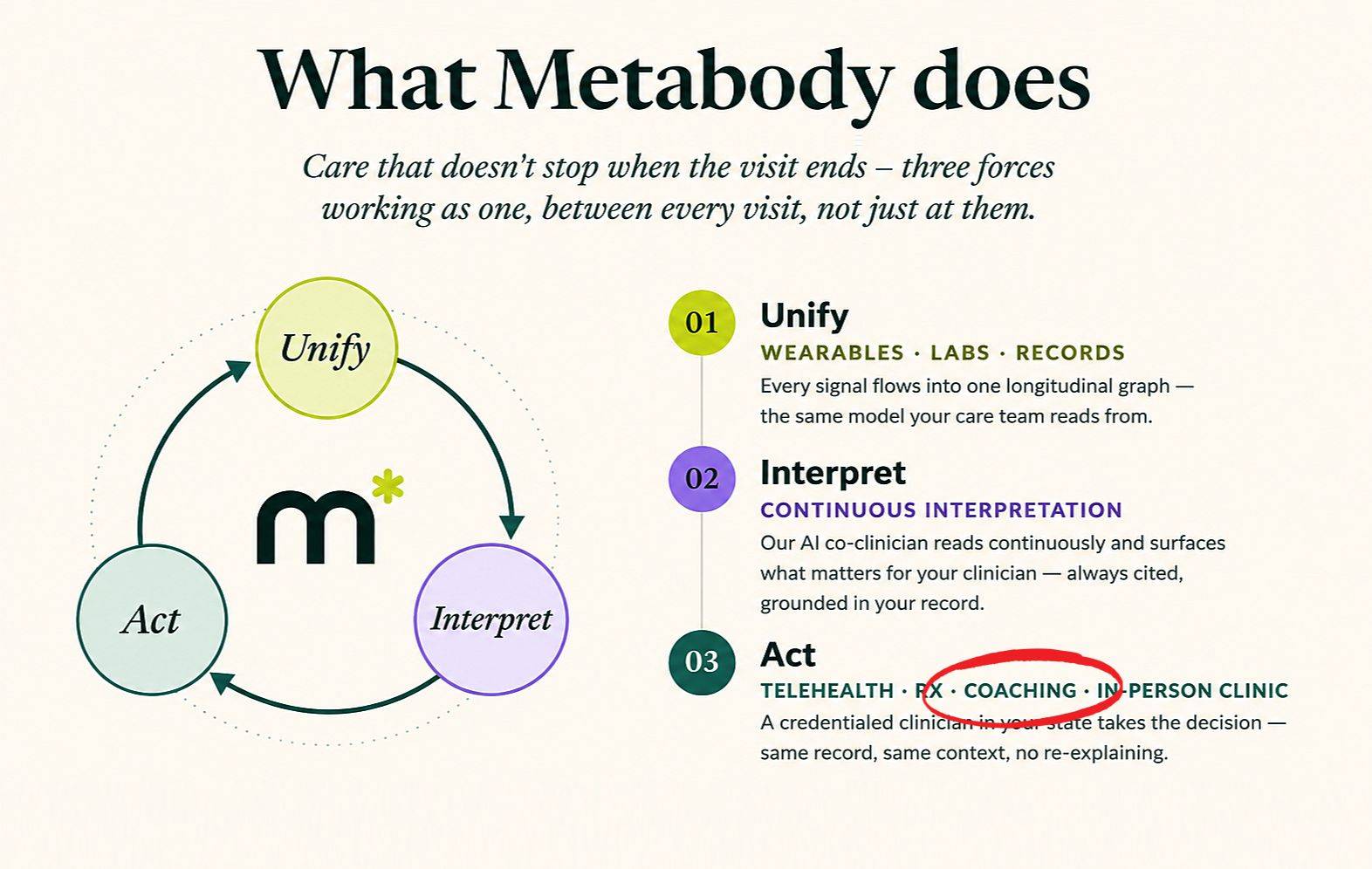
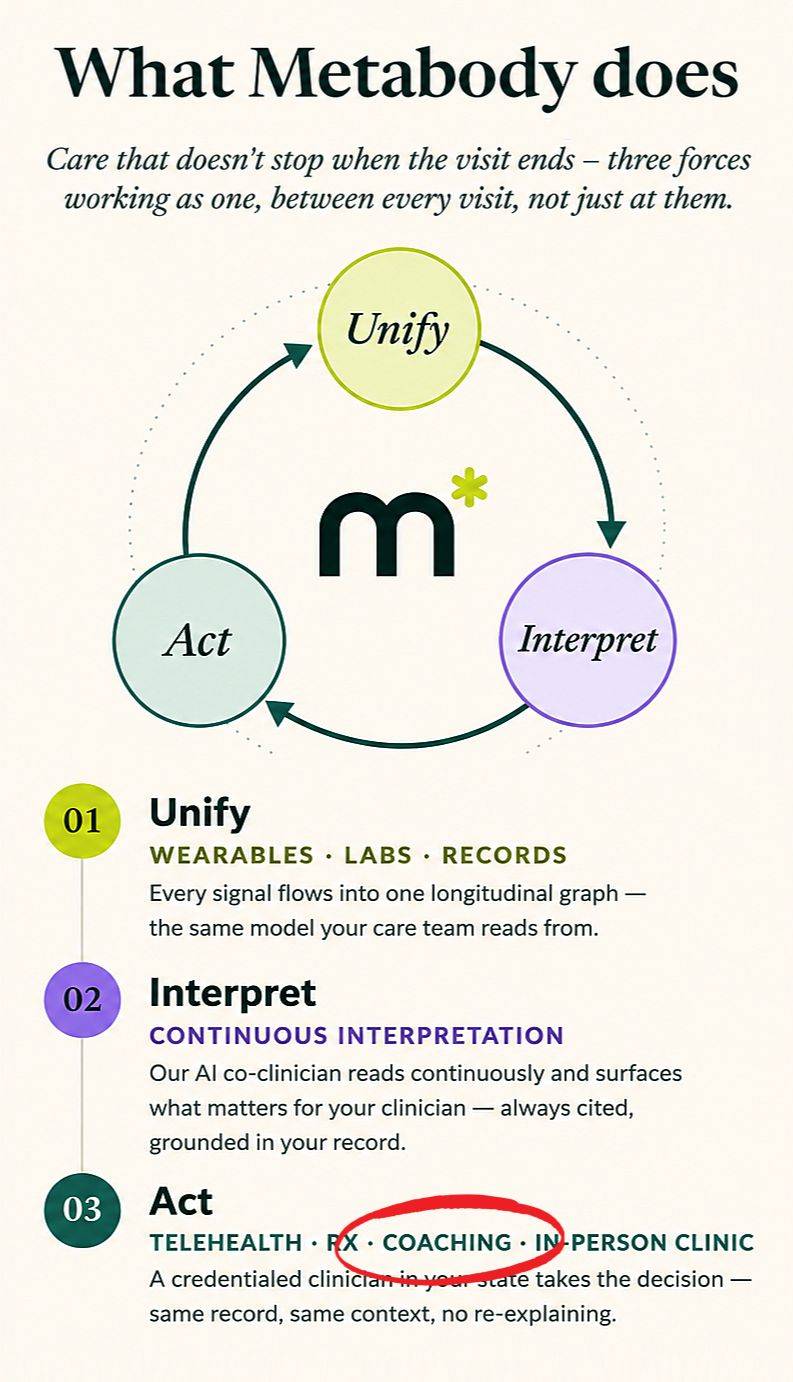
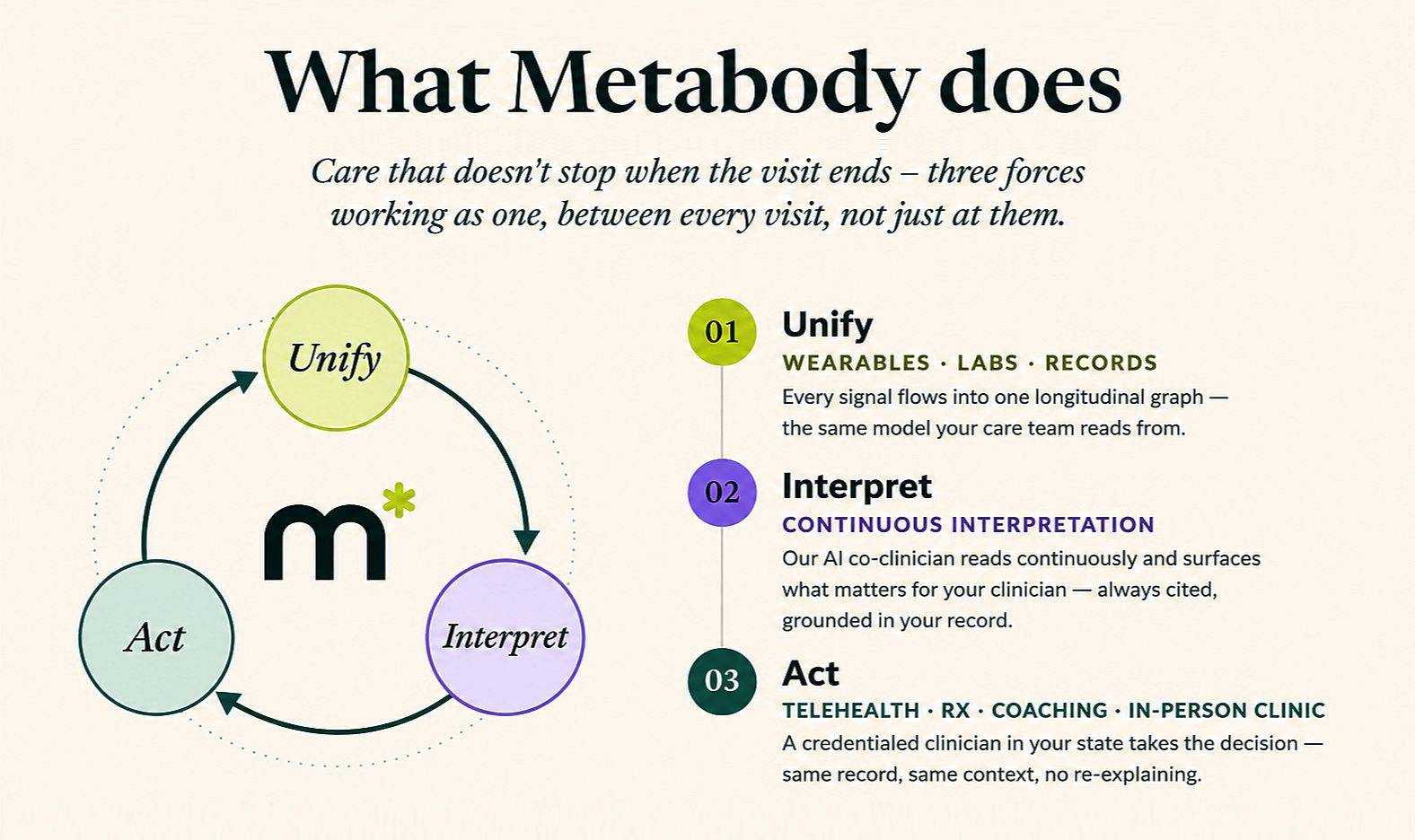
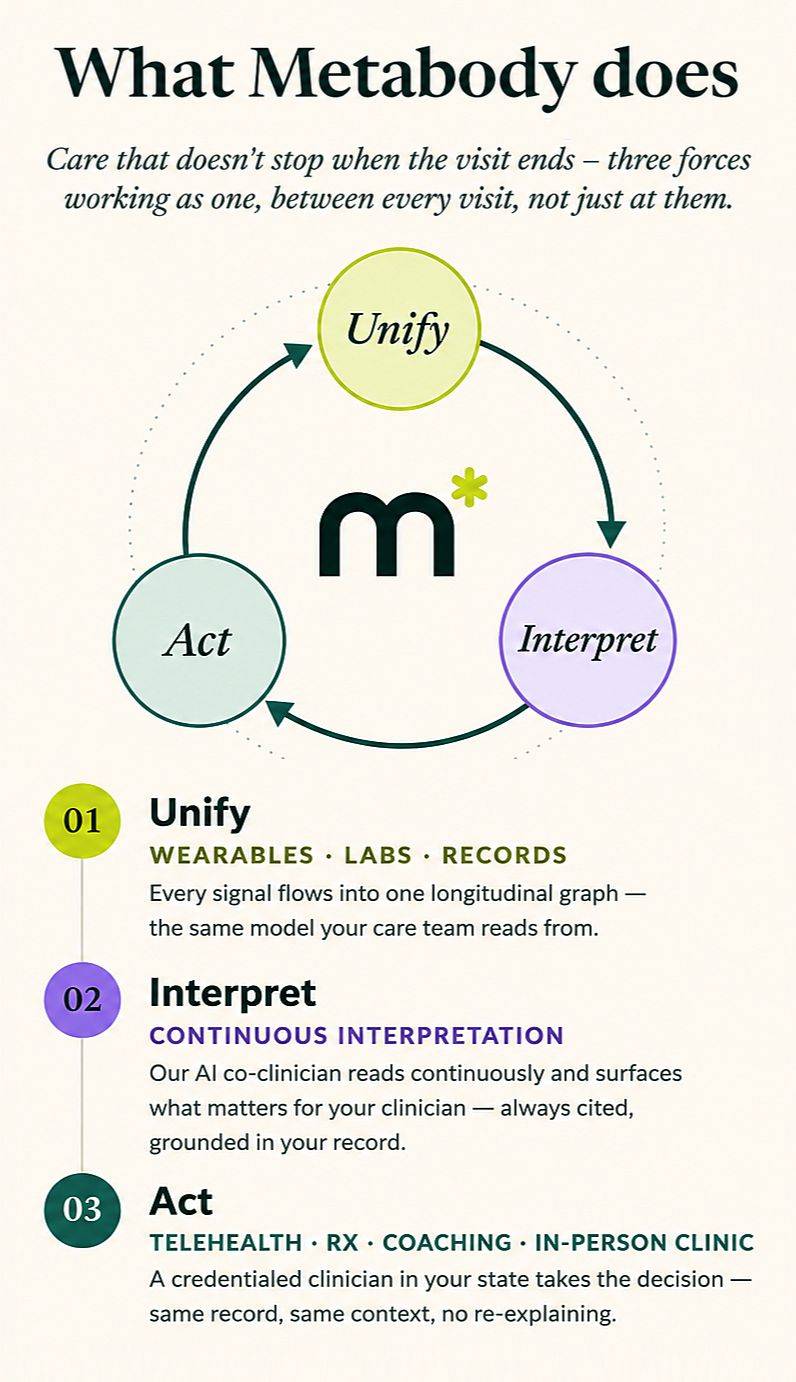
Metabody describes that system with three simple words: Unify. Interpret. Act.

Unify means bringing together the signals that help tell the story of a person’s health—labs, wearables, medical records and clinical history—into one longitudinal picture.

Interpret means using AI, together with clinical expertise, to continuously make sense of that information and identify what matters.

Act means connecting that intelligence to licensed clinicians who can make medical decisions, prescribe when appropriate and provide ongoing clinical care—and to certified coaches who help people turn those recommendations into real, sustainable changes in their everyday lives.

Metabody’s objective is to create a continuous loop: information leads to interpretation, interpretation leads to action, the results of those actions create new information, and the system continues learning from there.

Where Ben and BLIV Fit

Metabody’s acquisition of BLIV provided an important part of the “Act” side of that system: licensed clinicians, telemedicine and prescribing.

But having clinicians available is only part of the challenge. Those clinicians also need a thoughtful metabolic-health framework to guide the care they provide.

That is an important part of what Ben has been developing.

Over the past several months, Ben has created a series of detailed clinical protocols designed for physicians and prescribers. They address metabolic assessment, insulin resistance, nutrition, body composition, GLP-1 medications, muscle preservation, supplementation, hormone health and specialized interventions for patients who do not respond as expected.

The organizing principle should sound very familiar to anyone who has followed Ben or Insulin IQ:

Measure first. Address metabolic health at its source. Use medication when appropriate. Measure the response. And use the lowest effective intervention necessary to produce the desired result.

A Different Way of Thinking About GLP-1 Medications

Ben’s new GLP-1 Cycling Protocol is a good example of what that philosophy looks like in practice.

One of its central principles is:

“Lowest effective dose; responders hold.”

Instead of automatically increasing the dose according to a predetermined schedule, someone who is responding well can remain at the lower dose. The medication is intended to reduce hunger, cravings and “food noise” enough to help the person succeed while still prioritizing adequate nutrition, protein, resistance training and preservation of lean mass.

Just as importantly, Ben’s protocol does not assume that GLP-1 therapy must automatically become permanent.


The Four Cycles

Cycle 1: Recomposition. Use the medication to support fat loss while protecting muscle and beginning to establish better metabolic and behavioral habits.

Cycle 2: Lean Mass Optimization. Reduce the medication and shift greater emphasis toward strength, muscle, adequate nutrition and metabolic flexibility.

Cycle 3: Wind Down. Progressively reduce medication exposure while monitoring weight, cravings, body composition and metabolic health.

Cycle 4: Metabolic Maintenance. Allow nutrition, muscle, activity, sleep and other metabolic-health foundations to increasingly do the work.

For many people, the intended trajectory is eventually to maintain those gains without medication. Others may continue to benefit from a very small maintenance dose.

The objective is not simply maximum weight loss. It is better metabolic health with the minimum medication necessary to maintain it—potentially none at all.

But Clinical Action Is Only Half of “Act”

This is where another part of the picture becomes important.

A clinician can interpret labs, prescribe the appropriate medication, monitor side effects and decide when a dose should change.

But look at what Ben’s own protocol asks the patient to do:

Eat differently. Get enough protein. Strength train. Protect muscle. Improve sleep. Become more active. Develop new habits. Learn to manage hunger and cravings. And eventually maintain those changes while medication does progressively less of the work.

A prescription cannot do those things for someone.

That is the distinction between clinical action and patient action.

And it is where Insulin IQ fits into the larger Metabody vision.

Science Doesn’t Change Lives. Its Application Does.

For years, Insulin IQ has focused on the part of metabolic health that happens between medical appointments: education, coaching, accountability, community and helping people turn knowledge into sustainable daily behavior.

A clinician—and increasingly AI—can help someone understand what to do.

But knowing what to do and consistently doing it in real life are very different things.

That is where education, human connection and coaching can make a difference.

Not everyone needs the same amount of support. Some people may do very well with education, digital tools and AI-supported guidance. Others benefit from community and group support. And some need individualized coaching to work through the practical challenges standing between knowing what to do and actually doing it.

The goal is not to give everyone the most intensive form of support. It is to make sure each person has access to the level of support that can make a meaningful difference for them.

Community also makes human support scalable. Education, discussion, live interaction and coaching can help many people at once, while individualized 1:1 coaching remains available for those who genuinely need it.

Why These Pieces Belong Together

This is what makes the combination of Metabody, BLIV, Ben’s clinical framework and Insulin IQ so interesting.

Metabody can unify the information.

AI and clinical expertise can interpret it.

BLIV’s licensed providers can act on it medically.

And Insulin IQ can help people act on it in their everyday lives.

Then the results—better or worse—become new information. The system learns, the care can adjust, and the cycle begins again.

That extends Metabody’s Unify → Interpret → Act model beyond the clinical encounter and into the place where metabolic health is ultimately won or lost: everyday life.

And that is the larger vision.

Not simply better data. Not simply better AI. Not simply better prescriptions. And not simply better coaching.

A connected system that can understand the individual, provide appropriate clinical care, and then help that person turn the science into lasting metabolic-health change.

That is what we believe these pieces can become together.

This article describes an emerging clinical framework and model of care and is intended for educational purposes only. Medication decisions, dose changes, tapering and other clinical interventions should be made with an appropriately qualified healthcare provider.

The information on this website is not intended to be a substitute for professional medical advice, diagnosis, or treatment. Always seek the advice of qualified health providers with questions you may have regarding medical conditions.